Acoustic Design in Auditorium Seating: Why Wood Panel Perforation Matters
Introduction
When designing a performing arts center, university lecture hall, or grand concert auditorium, interior architects spend countless hours calculating room volume, wall materials, and ceiling geometries to achieve pristine sound quality. Yet, one of the most significant surface areas in the entire room is often overlooked until late in the design phase: the seating.Because auditorium chairs collectively cover up to 50% or more of the floor plane—whether occupied or vacant—their acoustic properties fundamentally dictate how sound behaves, reflects, and decays in the room. Integrating acoustic science into seat back design, specifically through engineered wood panel perforation, ensures your venue sounds as remarkable as it looks.
1. How Perforated Wood Panels Manage Room Acoustics
Sound behavior in a large public hall relies heavily on the balance between absorption, reflection, and diffusion.
- The Problem with Solid Surfaces: Flat, unperforated wood or hard plastic seat backs act as acoustic mirrors. They reflect sound waves sharply, creating harsh echoes, flutter echoes, and muddy sound distribution that ruins speech intelligibility and musical clarity.
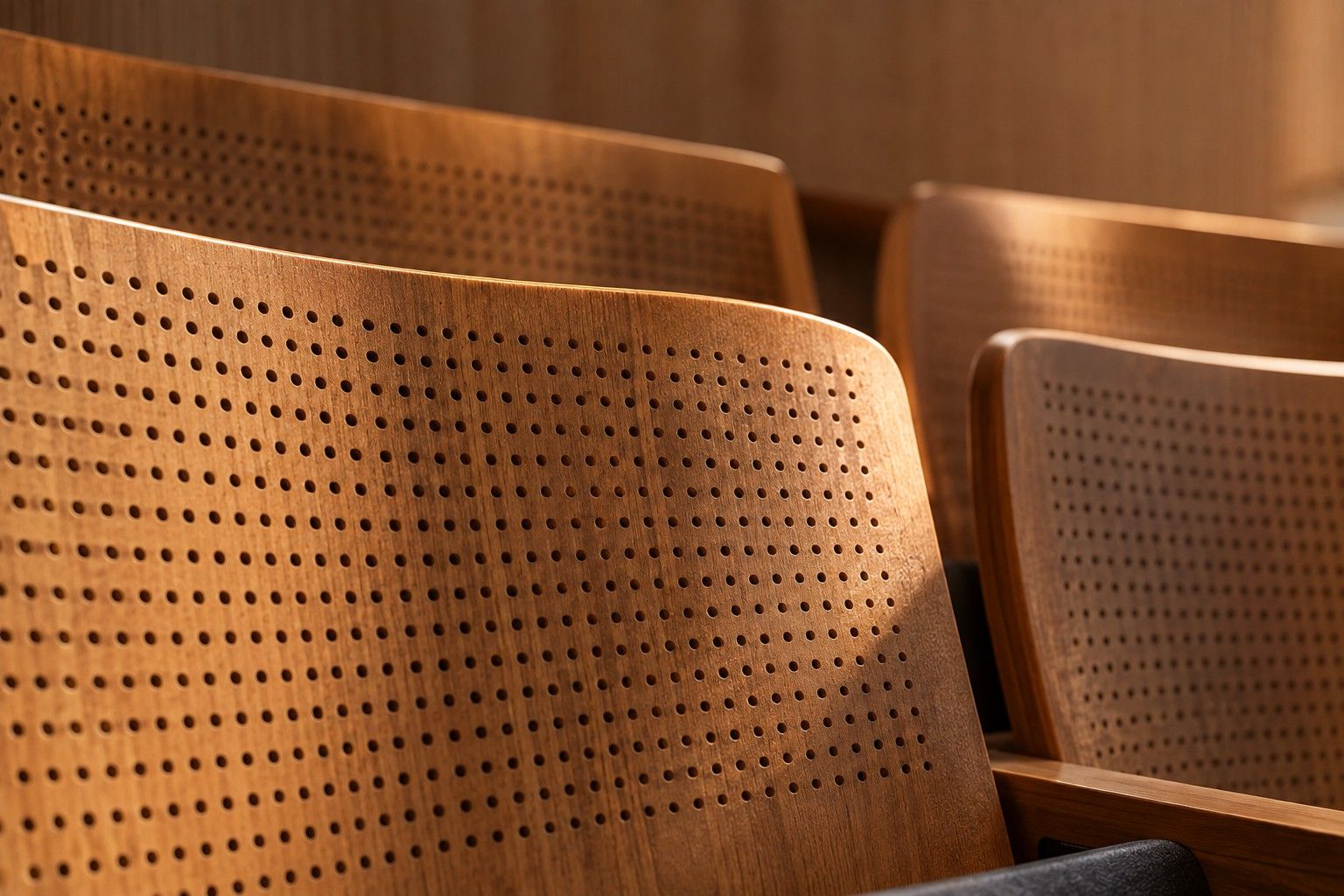
- The Physics of Perforation: Perforated wood back panels (such as those featured in our Arcadia series) act as Helmholtz resonators or broadband diffusers. As sound waves strike the panel, a portion of the acoustic energy passes through the precise micro-perforations into the internal cavity or acoustic absorption core behind the wood. This breaks up concentrated reflections, diffusing sound waves more evenly across the venue.
2. Venue Typologies Where Acoustic Seating Matters Most
While every commercial venue benefits from acoustic management, certain spaces require absolute precision:
- Concert Halls & Opera Houses: Where acoustic fidelity and natural orchestral projection are paramount, seats cannot act as acoustic dead zones or echo generators.
- Corporate Auditoriums & University Lecture Halls: High speech intelligibility is critical. Perforated back panels prevent voice reverberation, ensuring every presentation is crisp and clear without straining sound reinforcement systems.
- Multi-Purpose Performing Arts Centers: Venues hosting both heavy amplified rock concerts and delicate acoustic theatre require balanced sound absorption that adapts whether the house is packed or half-empty.
3. Critical Questions to Ask Your Seating Manufacturer
When evaluating acoustic seating options with your supplier, ensure you investigate the engineering—not just the aesthetics:
- Is the wood panel perforation pattern scientifically engineered for targeted acoustic NRC (Noise Reduction Coefficient) ratings, or is it merely decorative?
- What internal acoustic core material (such as specialized fiberglass blankets or dense acoustic felts) is concealed behind the perforated wood veneer?
- How does the chair's acoustic profile change when the seat is folded up (vacant) versus folded down (occupied)?
Conclusion
Acoustic seating is exceptionally easy to overlook during early blueprint planning, yet notoriously expensive and difficult to retrofit after construction is complete. Raising acoustic specifications directly with your manufacturer early in the design cycle guarantees a harmonious balance between structural beauty and sonic perfection.
Designing an acoustically demanding venue?
Discover our engineered Arcadia Series acoustic seating collections, or Request a Formal Quotation to review custom wood finishes and acoustic performance metrics with our team.