Fixed vs. Telescopic Seating: Choosing the Right System for Multi-Purpose Venues
Introduction
When programming a large civic arena, university gymnasium, high school fieldhouse, or municipal multi-purpose hall, square footage is one of your most valuable and constrained assets. Maximizing revenue and utility requires balancing large-scale seating capacity with the ability to clear the floor space for entirely different functions—from basketball tournaments and trade expos to banquets and graduation ceremonies.
The decision between permanent Fixed Seating and flexible Telescopic (Retractable) Seating depends far less on raw upfront budget and much more on operational workflow: How frequently does your venue need to transform its floor space?
1. Fixed Seating: Maximum Stability for Single-Purpose Venues
Fixed seating systems are permanently bolted to concrete tiers or floor structures, prioritizing uncompromising structural stability and maximum comfort.
- Ideal Applications: Dedicated auditoriums, performing arts centers, permanent cinemas, and specialized lecture halls where the floor layout never changes.
- Key Advantages: Fixed chairs allow for complex ergonomic shapes, plush upholstery, integrated writing tablets, folding armrests with cup holders, and electrical power/USB ports built directly into the arm structures. Because there are no moving mechanical tracks or motorized wheels, long-term maintenance requirements are minimal.
2. Telescopic (Retractable) Seating: Ultimate Spatial Versatility
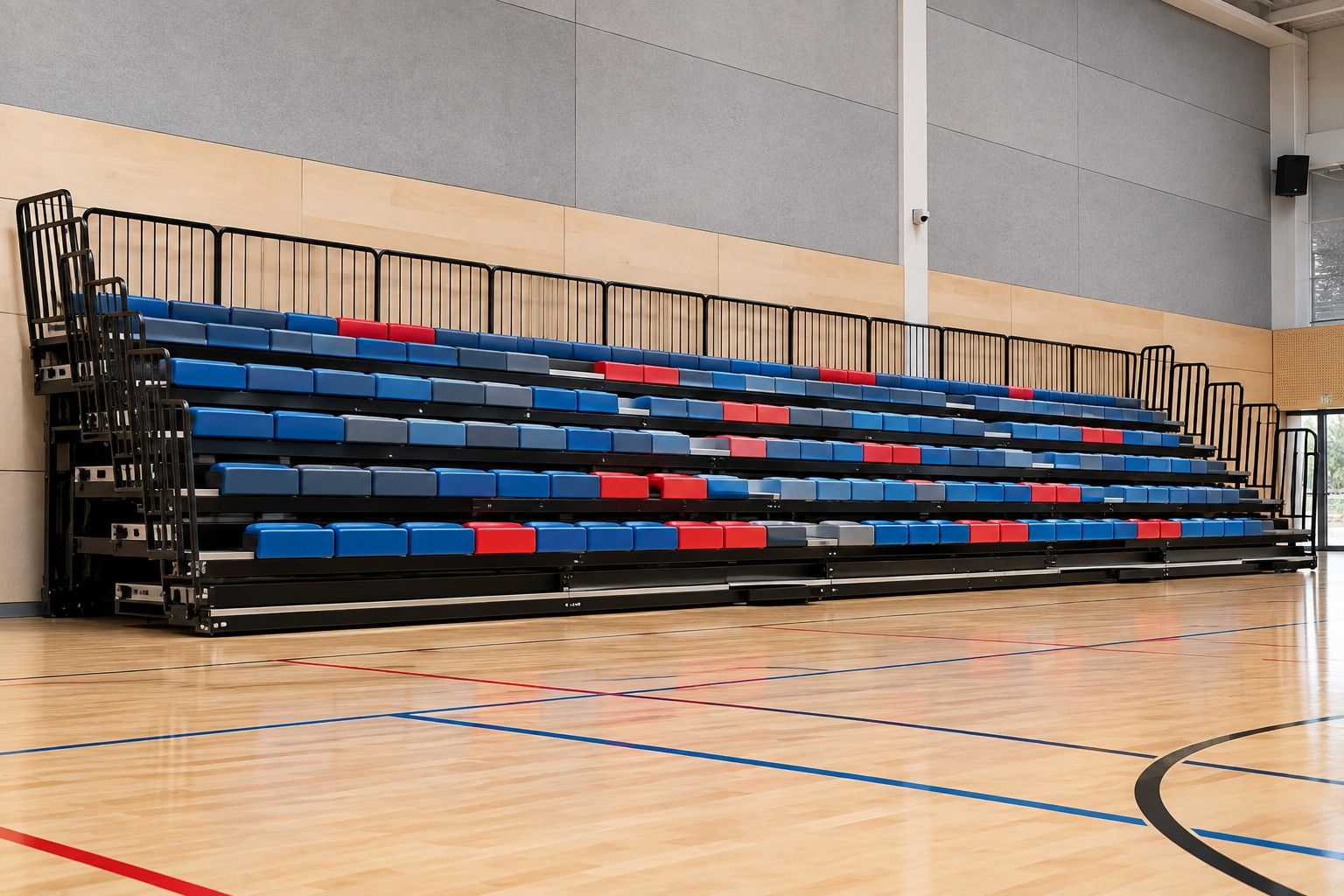
Telescopic platforms consist of tiered rows of seating that collapse vertically and nest neatly beneath one another, rolling back flush against a gymnasium or arena wall when not in use.
- Ideal Applications: Multi-purpose gymnasiums, school fieldhouses, civic convention centers, and multi-sport indoor arenas.
- Key Advantages: Within minutes, thousands of seats can be retracted to free up the entire floor plate for sports practice, exhibitions, or temporary staging. Modern telescopic systems can be manually operated or motorized, utilizing heavy-duty friction wheels and self-aligning guidance columns to ensure smooth, safe deployment.
3. Key Decision Factors for Spec-Writers
When consulting with architects and facility operators to determine the optimal layout, evaluate these three core operational drivers:
- Transformation Frequency: If your hall shifts configurations multiple times a week, a motorized telescopic system is essential. If the venue hosts ticketed performances or lectures year-round, fixed seating provides a superior spectator experience.
- Labor & Operational Costs: Automated telescopic systems reduce conversion crew headcounts and teardown time, offsetting initial capital investment through lower recurring operating costs.
- Seating Comfort Tier: While traditional telescopic bleachers utilized simple aluminum benches, modern systems can be fitted with individual plastic bucket seats or fully upholstered folding chairs for premium spectator comfort.
- The Middle Ground (Portable Bleachers): For venues with infrequent or light flexible-seating needs, mobile caster-wheeled portable bleachers offer a modular, budget-friendly compromise without permanent wall-attachment requirements.
Conclusion
Choosing the right seating system requires analyzing how your venue will operate five, ten, or twenty years down the road. Aligning your structural seating choice with your facility's operational schedule ensures maximum spatial utility, safety, and return on investment.
Planning a multi-purpose venue layout?
Explore our engineered Telescopic Seating Systems and Fixed Bleacher collections, or Request a Formal Quotation to discuss structural load specifications and floor-plan optimization with our technical team.